
Invisalign vs Braces
Invisalign or braces: which option may suit you?
Invisalign and traditional braces are both designed to improve tooth alignment, but treatment pathways, appearance, comfort, and suitability can vary between patients.
Explore Invisalign Options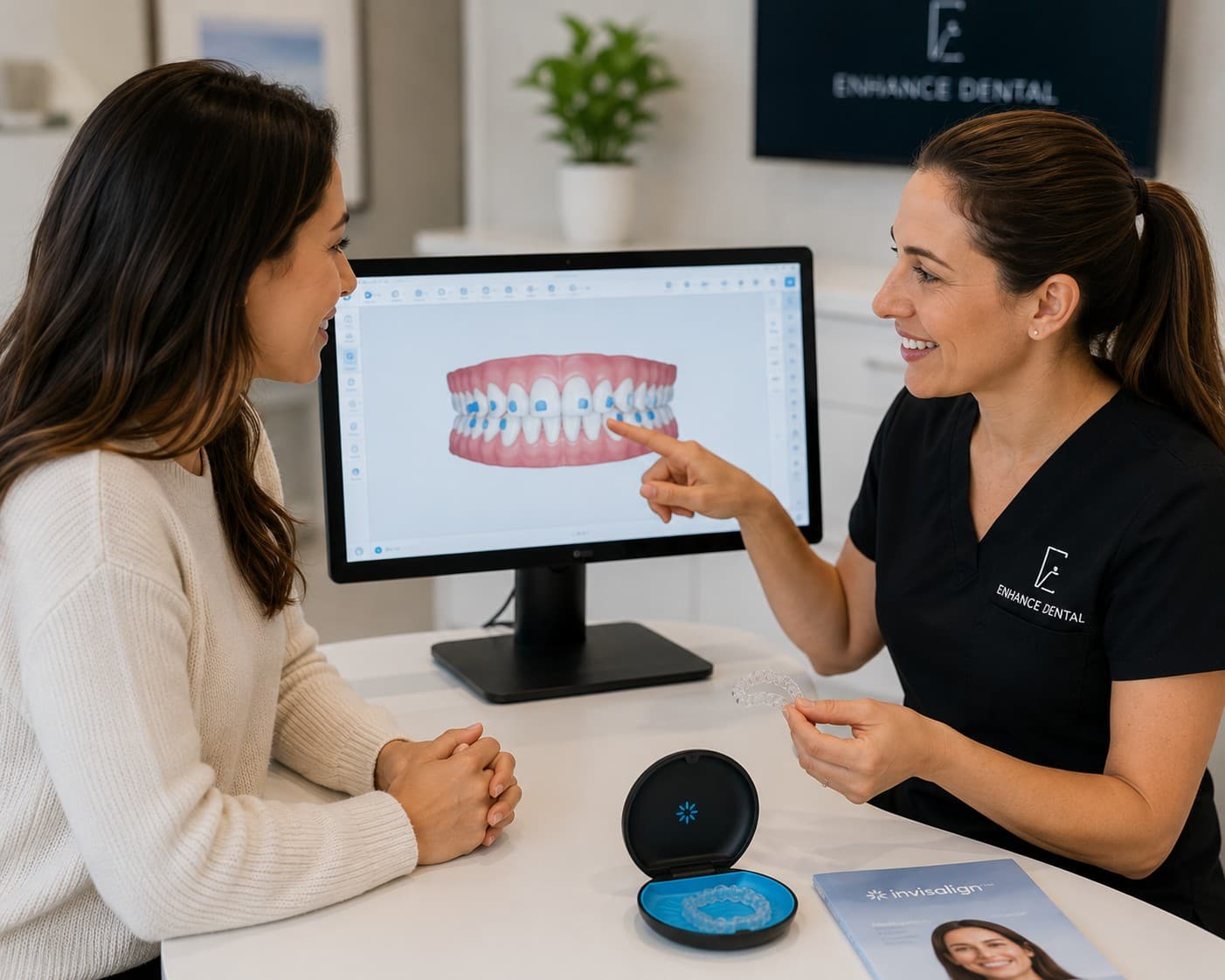
Both Invisalign and braces aim to improve alignment
Invisalign and traditional braces are orthodontic treatment systems designed to move teeth into improved positions over time. The most suitable approach depends on the patient’s goals, bite considerations, alignment complexity, and lifestyle preferences.
Consultation helps determine which treatment pathway may be most appropriate for the individual patient.
Key differences between Invisalign and braces
Appearance
Invisalign uses clear removable aligners, while braces use fixed brackets and wires attached to the teeth.
Removability
Aligners can be removed for eating and cleaning, while braces remain fixed during treatment.
Lifestyle considerations
Some patients prefer Invisalign because of its discreet appearance and flexibility in social or professional settings.
Treatment suitability
Certain orthodontic cases may respond differently depending on the type and complexity of movement required.
Why some patients explore Invisalign
- • Clear aligner appearance
- • Removable aligners for meals and cleaning
- • Reduced visibility in social settings
- • Digital treatment planning
- • Cosmetic-focused orthodontic pathway
Why some patients still choose braces
Traditional braces remain a widely used orthodontic option and may be recommended in certain cases depending on bite concerns, movement complexity, and treatment goals.
Orthodontic recommendations vary between individuals, and consultation helps determine what treatment approach may be most suitable.
Does treatment time differ?
Treatment time varies depending on the complexity of tooth movement, patient compliance, bite correction needs, and the overall treatment pathway recommended during consultation.
Some patients complete Invisalign treatment relatively quickly, while others may require longer orthodontic management depending on their smile goals.
Cost considerations
Orthodontic treatment costs can vary depending on treatment complexity, aligner planning, treatment duration, and individual smile requirements.
Learn more about Invisalign
Is Invisalign less noticeable than braces?
Many patients prefer Invisalign because the clear aligners are designed to be more discreet than traditional braces.
Can Invisalign treat complex orthodontic issues?
Suitability depends on the type of orthodontic movement and the individual treatment goals being explored.
Are braces faster than Invisalign?
Treatment duration varies significantly between patients and depends on treatment complexity and compliance.
How do I know which option is right for me?
Consultation helps determine suitability, smile goals, bite considerations, and treatment planning options.
Explore Invisalign treatment options in Melbourne.
Consultation can help patients understand orthodontic options, treatment suitability, cosmetic goals, and possible smile pathways.
Explore InvisalignTreatment suitability, duration, options, and outcomes vary between individuals. Consultation with a qualified dental provider is required before proceeding with any orthodontic treatment. Information on this page is general in nature and does not replace professional advice.